 Support US
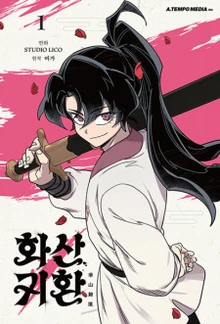
Read Return of the Mount Hua Sect Manga Online
Die Rückkehr der Huashan-Sekte, El regreso de la secta del Monte Hua, El retorno de la hoja del Ciruelo, El retorno del Monte Hua, Hwasan Gwihwan, Le retour du clan Hwasan, O retorno da seita do Monte Hua, Return of Sword Master, Return of the Flowery Mountain Sect, Return of the Huashan Sect, Return of the Mount Hua Sect, Return of the Sword Master (LICO), Secta de la montaña, หวนคืนสู่ฮวาซาน, 剑尊归来, 劍尊歸來, 劍尊歸來 第二季, 花山歸還, 華山帰還, 화산귀환
Synposis:
When Cheongmyeong of the Mount Hua Sect awakens a hundred years in the future, his last memories are of a bloody battle against the Leader of the Demonic Cult, the evil Cheonma. The battle almost saw the end of the Ten Great Sects of ancient China, when Cheongmyeong ended the hard-fought struggle by
Type: Manhwa
Status: ongoing
Author(s): Biga
Artist(s): LICO
Released: 2021
Return of the Mount Hua Sect Chapters
Return of the Mount Hua Sect (화산귀환)
Return of the Mount Hua Sect (Korean: 화산귀환, Hwasan Gwihwan) stands as a titan in the modern martial arts (Murim) manhwa landscape. Penned by original web novel author Biga (비가) and adapted into a visually explosive webcomic by Studio LICO, this Naver Webtoon powerhouse redefines the regression genre. Boasting hundreds of chapters across its original serialization, it expertly balances high-stakes martial arts action, deep Daoist philosophy, and sharp, character-driven comedy.
The core premise subverts traditional power fantasies. Chung Myung, the 13th-generation Plum Blossom Sword Saint of the Mount Hua Sect, sacrifices himself to defeat the Heavenly Demon, bringing a bloody era to an end. Instead of ascending, he wakes up 100 years in the future in the body of a beggar child. The true hook isn’t his reincarnation—it’s the horrifying discovery that the glorious Mount Hua Sect he died to protect has fallen into absolute ruin, its legacy erased, its wealth stolen, and its supreme martial arts lost to time. What begins as a classic reincarnation hook evolves into an intricate, economics-driven, and politically charged epic about rebuilding a corporate and spiritual empire from the ashes.
Latest Return of the Mount Hua Sect Updates & Serialization Status
The manhwa adaptation is a flagship title on Naver Webtoon (Korean) and LINE Webtoon (English). After concluding a massively successful Season 1, the series returned for Season 2, maintaining a rigorous weekly release cadence. In print, the physical manhwa volumes are regularly published in Korea, with English print serialization handled by major international publishers like Ize Press.
Beyond the webtoon, the franchise has expanded into an unstoppable transmedia juggernaut. The original web novel boasts thousands of chapters, acting as the foundational blueprint. Audio dramas and physical merchandise have shattered crowdfunding records in South Korea, proving the IP’s massive, cult-like following. While a full-length Japanese TV anime adaptation has not yet materialized, the series frequently receives high-budget animated PVs (promotional videos) from Studio LICO, fueling constant rumors and fan demand for a seasonal anime adaptation.
Story Overview & Core Narrative Arcs
The narrative foundation of Return of the Mount Hua Sect centers entirely on the monumental task of institutional resurrection. Chung Myung operates as a protagonist with end-game knowledge but zero starting resources. He must physically rebuild his underdeveloped body, forcibly train a generation of soft, untalented disciples, and navigate the treacherous politics of the Murim (the martial arts underworld) to reclaim Mount Hua’s stolen assets. Escalation is driven not just by physical fights, but by financial crises, reputation building, and clashes with rival sects who profited from Mount Hua’s downfall.
-
The Financial Resurrection Arc: Early plots focus heavily on economics—securing ledgers, establishing trade routes, and pulling the sect out of crippling debt.
-
The Ruthless Training Regimes: Recurring sequences where Chung Myung physically and psychologically breaks down his seniors to rebuild them as elite warriors.
-
The Inter-Sect Tournaments: High-stakes martial arts conferences where Mount Hua must publicly violently reassert its dominance and prove the Plum Blossom legacy is alive.
-
The Search for Lost Techniques: Expeditions to recover ancient manuals and lost pill recipes stolen by rival factions over the past century.
-
The Shadow of the Demonic Cult: The ever-present, looming dread that the Heavenly Demon’s followers are regrouping, contrasting the comedy with apocalyptic stakes.
Main Characters in Return of the Mount Hua Sect
Chung Myung (The Protagonist) Known as the Plum Blossom Sword Saint in his past life, Chung Myung is a wildly unconventional hero. He is greedy, foul-mouthed, violent, and utterly devoid of traditional heroic stoicism. However, beneath his gremlin-like exterior lies a man burdened by profound survivor’s guilt and a fanatical devotion to his sect. His progression is less about learning new skills and more about conditioning his new, fragile body to handle the god-tier techniques he already knows.
The Demonic Cult (Central Antagonist Faction) While individual villains cycle through arcs, the ultimate antagonist is the legacy of the Heavenly Demon. The Demonic Cult represents absolute chaos and destruction. Even 100 years after their leader’s death, the cult operates in the shadows, attempting to resurrect their master. They serve as a grim mirror to Mount Hua: both factions were decimated in the war, and both are trying to claw their way back to supremacy.
Baek Cheon (Key Supporting Anchor) The Second-Class Disciple and “Righteous Sword” of Mount Hua, Baek Cheon serves as Chung Myung’s primary foil, punching bag, and eventual true successor. Initially presented as a haughty, perfect senior disciple, his worldview is shattered by Chung Myung. Baek Cheon’s arc is one of the most compelling in the series, transitioning from arrogant noble to a battle-hardened, self-sacrificing leader who genuinely carries the weight of the sect’s future on his shoulders.
Lore, Power Systems, and World Mechanics
The power system is deeply rooted in traditional Wuxia and Xianxia mechanics, focusing on Qi (internal energy), Dantian refinement, and martial arts forms, but executed with rigorous rules and distinct visual flair.
-
The Plum Blossom Aura: Mount Hua’s signature technique. It requires perfect harmony of mind, body, and sword. Masters can manifest their Qi as illusionary, razor-sharp plum blossom petals that overwhelm opponents in a beautiful, lethal storm.
-
Internal Energy (Qi) Cultivation: Power is determined by the purity and volume of Qi stored in the Dantian. Chung Myung must reinvent his cultivation method to build a flawless foundation he lacked in his past life.
World Hierarchy Breakdown:
-
The Ten Great Sects: The orthodox pillars of the Murim, including Shaolin, Wudang, and Mount Hua (formerly). They are political entities masquerading as religious/martial orders.
-
The Five Great Family Clans: Bloodline-based martial factions (e.g., the Tang Clan of Sichuan, known for poison and hidden weapons).
-
The Demonic Cult: The unorthodox, chaotic evil faction worshipping the Heavenly Demon.
-
The Beggars’ Union: The supreme intelligence network of the Jianghu, operating in plain sight.
Narrative Framework & Progression Appeal
The series hooks readers through a masterful manipulation of pacing and stakes. It operates on a “satisfaction engine”—Chung Myung constantly faces arrogant enemies who underestimate him due to his youth, leading to immensely cathartic beatdowns. Yet, the story prevents power creep by making the ultimate goal not just personal strength, but the elevation of an entire institution.
-
Institutional Progression: Leveling up the sect’s finances, facilities, and reputation feels as rewarding as a character leveling up.
-
The “Underdog with a Nuke” Trope: The tension of knowing the protagonist is a master trapped in a novice’s body, waiting for the moment he reveals his true fangs.
-
Brutal Comedy as Coping Mechanism: Humor is used to balance the grim reality of the sect’s situation and Chung Myung’s PTSD.
-
Trickle-Down Power Dynamics: Chung Myung forces his peers to grow; his progression inherently pulls the entire supporting cast upward.
-
Political Checkmating: Conflicts are often resolved through blackmail, contract manipulation, and public relations as much as swordplay.
Franchise Identity & Production Quality
Studio LICO’s adaptation is a masterclass in Webtoon production, defining the visual identity of the franchise and elevating Biga’s original text.
-
Expressive Caricatures: The art seamlessly transitions from high-detail, breathtaking martial arts panels to distorted, meme-worthy reaction faces for comedic effect.
-
Color Theory in Combat: The use of vivid pinks and reds for the Plum Blossom techniques creates a stunning visual contrast against the dark, gritty backgrounds of the Murim.
-
Dynamic Paneling: Action sequences utilize the vertical scrolling format to create a sense of falling, speed, and continuous motion.
-
Consistent Quality: Unlike many long-running webtoons, Studio LICO maintains tight quality control, preventing art degradation over hundreds of chapters.
-
Thematic Visual Motifs: The recurring imagery of barren winter branches blooming into spring perfectly mirrors the resurrection of the sect.
Setting & Societal Impact
The world of Return of the Mount Hua Sect treats the Murim not as an isolated fantasy land, but as a complex ecosystem intertwined with civilian life and government.
-
Martial Capitalism: Sects require massive funding to feed and house disciples. The series explores the unglamorous reality of martial artists needing civilian businesses (inns, escort agencies) to survive.
-
Civilian Collateral: The story rarely ignores the impact of martial conflicts on ordinary people, highlighting the hypocrisy of “righteous” sects who ignore civilian suffering.
-
Government Oversight: The Imperial Palace maintains an uneasy truce with the Murim, adding a layer of bureaucratic tension to sect operations.
-
Information Warfare: Factions rise and fall based on rumors. The Beggars’ Union controls the flow of information, making PR a vital weapon for Mount Hua.
-
Generational Decay: A recurring theme is how times of peace make martial artists soft, setting up the central conflict of preparing a weak generation for an impending, forgotten war.
Why Return of the Mount Hua Sect Is So Popular
-
The Unhinged Protagonist: Chung Myung’s villainous approach to doing good is intensely refreshing in a sea of standard, self-righteous heroes.
-
Elite Pacing: The story constantly rewards the reader. Arcs are tight, and the payoff for setups (whether comedic or action-oriented) is consistently delivered without dragging.
-
Masterful Tonal Shifts: It can make you laugh out loud in one panel and give you goosebumps with a genuinely emotional, cinematic sword strike in the next.
-
Found Family Dynamics: The abusive but deeply loving dynamic between Chung Myung and his fellow disciples creates a fiercely loyal attachment to the supporting cast.
-
Visual Spectacle: Studio LICO’s rendering of the Plum Blossom sword arts is widely considered some of the most beautiful action choreography in modern manhwa.
-
Nostalgia Meets Modernity: It takes the classic tropes of vintage Wuxia (Sects, Qi, Demons) and injects them with modern web novel progression mechanics and humor.
Where to Read Return of the Mount Hua Sect Officially
To support the creators and read the definitive translations, readers can access the series through:
-
LINE Webtoon (English): The official digital platform for English readers, updating weekly.
-
Naver Webtoon / Naver Series (Korean): The raw, original platform for both the manhwa and the web novel.
-
Ize Press (Yen Press): The official publisher for physical English manhwa volumes, providing high-quality print editions for collectors.
Final Thoughts
Return of the Mount Hua Sect has fundamentally raised the bar for the martial arts regression genre. It proves that an overpowered protagonist doesn’t have to result in a boring narrative, provided the stakes are shifted from personal survival to institutional legacy. Through a perfect marriage of Biga’s brilliant character writing and Studio LICO’s kinetic art, the series captures lightning in a bottle.
As the serialization continues into deeper, darker narrative arcs, the trajectory remains overwhelmingly positive. It has moved beyond being just a popular webtoon to becoming a foundational pillar of modern Korean pop culture. For anyone looking to understand the pinnacle of the Murim genre, witnessing the blooming of the plum blossoms on Mount Hua is absolutely essential reading.